How to remove and prevent mould in the bathroom
Updated: 14 October 2026
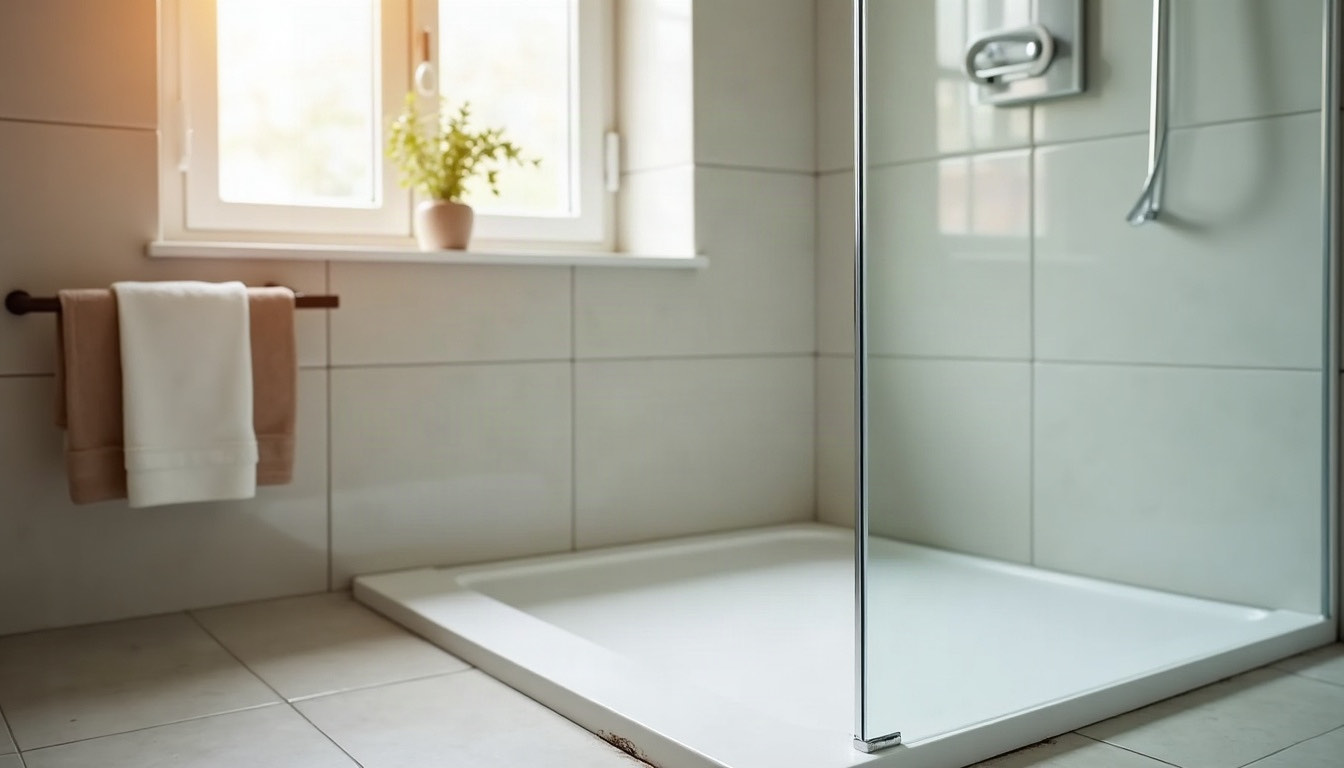
A bathroom is the most humid room in the home. After every shower there is a cloud of steam, and if it does not leave quickly enough, black spots appear: first on the sealant, then between the tiles and on the ceiling.
Cleaning removes the spots. Ventilating and drying prevents them from coming back. This article covers both, plus when it is no longer a cleaning job.
Why the bathroom?
Mould needs three things: moisture, a little food (soap residue, skin flakes, limescale) and time. A bathroom has plenty of all three. After a shower, steam settles on the coldest surfaces: the ceiling, the outside wall, the corners and the sealant. If that does not dry within a few hours, mould gets its chance.
RIVM, the Dutch public health institute, points out that mould attaches more easily to limescale and dirt. Regular cleaning therefore also helps you stay ahead of it.
Removing mould: tiles, grout and ceiling
Tiles and smooth surfaces. Milieu Centraal and RIVM advise removing mould with washing soda dissolved in hot water. Take a cloth or sponge, wet the spot and wipe the mould away. Rinse with clean water and dry everything well.
Grout between the tiles. Grout is rougher and more porous than the tiles. Light marks often come out with soda and a sponge. If the mould is deep in the grout, it will return. Milieu Centraal advises replacing affected rough material; for grout that means raking it out and regrouting.
Ceiling and walls. Clean painted surfaces with a sponge and soda, without too much water. If it keeps coming back, an anti-mould bathroom paint applied after cleaning helps: walls with such paint are much less likely to grow mould again.
Work safely.
- Wear gloves. RIVM also recommends a face mask while scrubbing.
- Do not use a dry brush: it sends mould particles into the air. Work wet, with a cloth or sponge.
- Open a window or keep the extractor running.
- If you have a mould allergy or airway problems, leave the cleaning to someone else.
Bleach? Preferably not
Many shop-bought mould sprays contain chlorine. RIVM advises against products with chlorine or ammonium compounds because they can irritate the airways. Bleach also mostly whitens the spot: it looks clean, but the cause remains.
If you do use a product with chlorine, never mix it with vinegar, descaler or any other acidic product, and not with ammonia either. That releases toxic chlorine gas. Use one product at a time and rinse well before using anything else.
Mould in the sealant: replace it
Silicone sealant is soft and slightly porous. Mould grows into it, not just onto it. Cleaning makes the joint a bit lighter at best; the black comes back.
The only real solution is to replace the sealant:
- Cut out the old sealant with a sealant knife or sharp blade and remove the remains.
- Clean the joint with soda and hot water and let it dry completely.
- Apply new sanitary sealant and smooth it.
- Let it cure as the packaging says before you shower again.
Done well, new sealant lasts for years, especially if you ventilate better afterwards.
How to stop it coming back
Ventilate during and after showering. Switch on the extractor and let it run on for a while afterwards. For the bathroom, Milieu Centraal recommends a fan controlled by humidity: it runs as long as needed by itself. No extractor? Open the window.
Keep the door closed while showering. RIVM mentions this explicitly: it stops the moisture spreading through the home, where it settles on cold windows and walls. More on that in condensation on windows.
Squeegee the tiles and shower screen. It takes ten seconds and removes most of the water before it can evaporate.
Dry towels outside the bathroom if it is small or already damp.
Clean the extract valve. A dusty valve extracts much less. Vacuum or wipe it a few times a year.
Clean regularly. Soap residue and limescale feed mould. Wiping grout and sealant weekly helps you spot the first marks early.
When is it more than a cleaning job?
Call a professional if:
- the mould covers a large area or comes back very quickly;
- you see wet patches without a clear cause, or it smells musty;
- mould keeps returning in the same spot on an outside wall.
According to Milieu Centraal, mould can be caused by a structural problem such as a leak, rising damp or a cold bridge. Then cleaning will not help and a repair is needed. Have leaks fixed quickly. If you rent, report it to your landlord.
How Domeaz helps
Most mould starts with maintenance that slips. In Domeaz you plan “Clean bathroom extract valve” and “Check sealant” as recurring maintenance and get a reminder automatically. When you have the sealant replaced or the bathroom fan renewed, you note under “Done” who did it and what it cost. It is then in your maintenance history and, if you sell, in your home file.
A year-round schedule for the rest of the home is in our home maintenance schedule.
Domeaz is free to start and has no ads. Discover Domeaz.
Frequently asked questions
- How do you get mould out of the bathroom?
- Milieu Centraal and RIVM, the Dutch advice centre and public health institute, advise removing mould from smooth surfaces such as tiles with washing soda dissolved in hot water. Use a cloth or sponge, not a dry brush, and wear gloves. Dry everything well afterwards.
- Should you use bleach on mould?
- Preferably not. RIVM advises against products with chlorine or ammonium compounds because they can irritate the airways. If you do use bleach, never mix it with vinegar, descaler or any other acidic product: that releases toxic chlorine gas.
- Why does the mould keep coming back?
- Because the cause remains: too much moisture leaving too slowly, or a structural problem such as a leak or a cold bridge. Cleaning removes the spots; only better ventilation and tackling the cause keep them away.
- Can you get mould out of silicone sealant?
- Usually not. Mould grows deep into soft and rough materials such as sealant and grout. Milieu Centraal advises replacing affected material. For sealant that means: cut out the old sealant, clean and dry the joint, apply new sanitary sealant.
- When should you call a professional?
- When the mould covers a large area, comes back quickly, or goes together with wet patches or a musty smell without a clear cause. A leak, rising damp or a cold bridge may be behind it. If you rent, report it to your landlord.
This article was written with the help of AI and checked by the Domeaz team. The sources are in the text. Spotted a mistake? Email hello@domeaz.app.