When is your car's inspection due? Finding the date, and what else to track
Updated: 30 October 2026
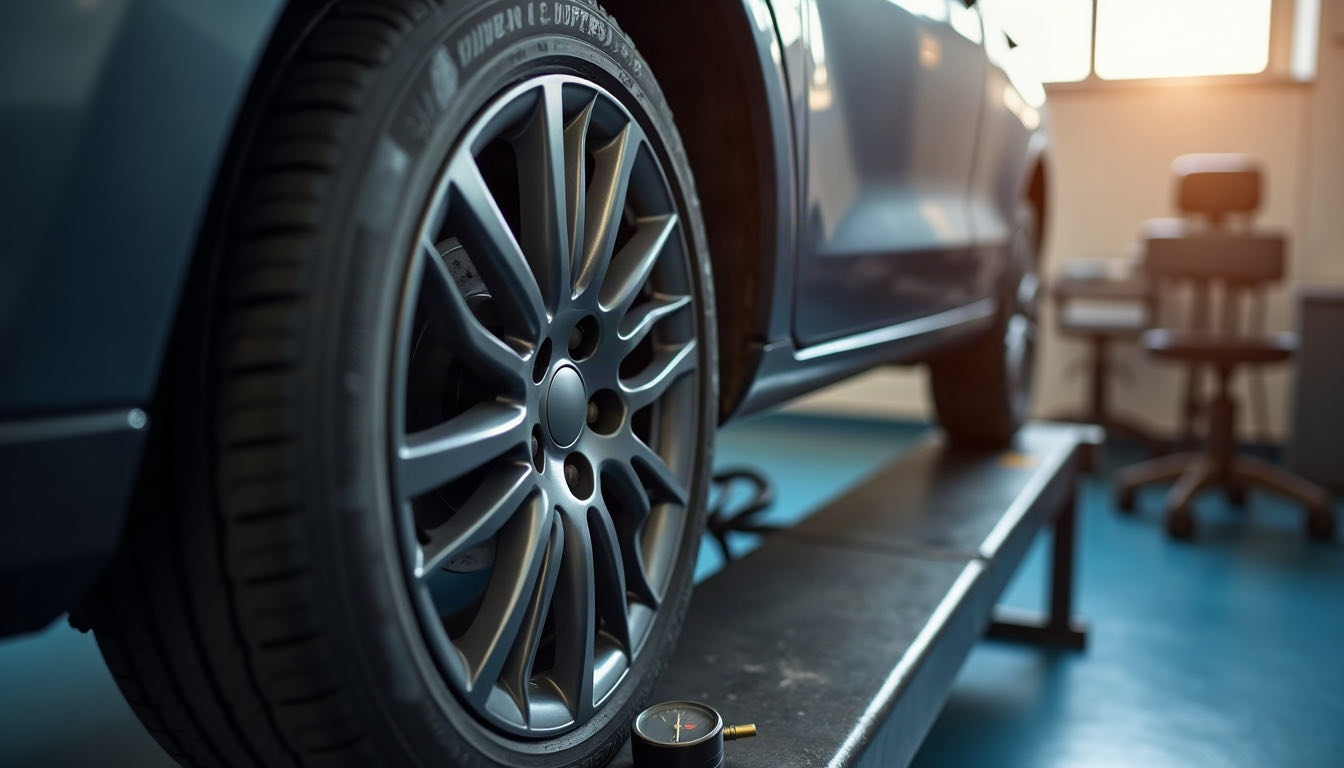
The reminder letter is somewhere under a pile of post, or it never arrived because you moved. And suddenly the car is parked outside with an expired inspection. That is a shame, because the due date is easy to find and simple to plan well ahead. This article explains how often a car must be tested in Europe, how to find the date in a few countries, and what else is worth keeping track of.
The EU minimum
Every EU country has a periodic roadworthiness test for cars: the APK in the Netherlands, the Hauptuntersuchung (often just called “TÜV”) in Germany, the contrôle technique in France and Belgium. The rules come from EU Directive 2014/45/EU, which applies since 2018. For passenger cars and light vans it sets the minimum: a first test four years after first registration, then every two years.
That is a floor, not a ceiling. Countries can test more often, and several do. So the answer to “when is my car due?” depends on where it is registered.
The Netherlands: APK
According to the RDW, the Dutch vehicle authority, it depends on fuel and age, counted from first registration. For passenger cars up to 3,500 kg:
| Age and fuel | First test | After that |
|---|---|---|
| Petrol, electric (incl. petrol hybrid) | at 4 years | twice every 2 years, yearly from 8 years |
| Diesel, gas or other (incl. diesel hybrid) | at 3 years | every year |
| 30 years or older | every 2 years | |
| 50 years or older | no test required |
Finding the date: enter the number plate in the RDW’s public plate check at ovi.rdw.nl and open the tab with expiry dates and history. No login is needed, so it also works for a second-hand car you are thinking of buying.
Testing early: from two months before the due date, without losing time. The RDW sends one reminder letter six weeks before. A late test can lead to a fine of 180 to 500 euros; postponement is not possible.
Germany: Hauptuntersuchung
For passenger cars in Germany the main inspection (HU) is due 36 months after first registration, then every 24 months, under § 29 of the German road vehicle regulations (StVZO).
Finding the date: there is no public lookup by plate. Look at the round inspection sticker on the rear number plate: the number in the middle is the year, and the month is the one pointing up, at twelve o’clock. The date is also on your last inspection report.
Running late: according to German consumer and legal sites, a fine applies once you are more than two months late, and it rises with the delay; beyond eight months it also costs a point in the driving register. The inspection itself can then be more extensive and more expensive.
Belgium: technical inspection
In Flanders a car goes for its first technical inspection when it turns four, counted from first registration. According to the Flemish government, passenger cars move from a yearly test to a test every two years from 1 September 2026. As in the Netherlands, you can test from two months before the reference date and keep that date. Wallonia and Brussels have their own rules; check your regional inspection body.
Other countries
The pattern elsewhere is similar, with local differences: a first test after three or four years, then every one or two years. Your last inspection certificate shows the next due date, and your national vehicle authority or inspection organisation has the exact rules. Moving abroad with a car? Check what happens to its inspection when you re-register it.
What else to track for your car
The roadworthiness test is a minimum safety check. A pass says nothing about the timing belt due in 10,000 kilometres, or the brake fluid nobody has changed in three years. Worth keeping track of yourself:
- Services. The manufacturer sets an interval in time and in kilometres, for example every year or every 15,000 km, whichever comes first. The exact interval is in the service book or manual and differs per car.
- The odometer reading. Note it now and then, so you can see when the next service is due by mileage.
- Tyres. Check pressure monthly, and if you use winter tyres: when you swap, and where the other set is stored. In some countries winter tyres are required in certain conditions; check the local rules.
- Recalls. Manufacturers recall cars when there is a safety problem. In the Netherlands the RDW plate check shows open recalls; elsewhere the manufacturer or national authority does.
- Costs. Keep what each service and repair cost, with the receipt. It helps when comparing garages and adds value when you sell, just like the receipts and guarantees for your appliances.
A service history with dates, mileage and invoices also makes a car worth more when you sell it: it shows it has been looked after.
How Domeaz helps
In Domeaz you add your car to the garage. With a Dutch number plate, the app fetches make, model, year, fuel, colour and the APK date for free from the RDW’s open register, and warns you about an open recall. Outside the Netherlands you enter the details yourself, including the next inspection date. Either way you get a maintenance plan that fits the vehicle, with the inspection, services by time and by mileage, tyre pressure and winter tyres, and a reminder in advance.
When you log a service or repair, you note the mileage, the cost and which garage did it. The costs count towards your yearly overview, next to your fixed household costs. Bikes and e-bikes fit in too. Read more about garage and vehicles in Domeaz.
Domeaz is free to start and has no ads. Discover Domeaz.
Frequently asked questions
- How often does a car need a roadworthiness test in the EU?
- EU Directive 2014/45/EU sets the minimum for passenger cars: a first test four years after first registration, then every two years. Countries may test more often, and many do.
- How do I find my car's inspection due date?
- It depends on the country. In the Netherlands you can look up the APK date by number plate on the RDW website. In Germany the month and year are on the inspection sticker on the rear plate. Elsewhere, check your last inspection certificate or your national vehicle authority.
- Can I have my car tested early?
- Often yes, within a window. In the Netherlands and Flanders you can test from two months before the due date without losing time; the new date counts from the old one. Test earlier and the date moves forward.
- What happens if the inspection expires?
- Rules and fines vary by country. In the Netherlands the RDW says a late test can lead to a fine of 180 to 500 euros. In Germany fines start once you are more than two months late and rise with the delay. Driving with an expired test can also cause problems with your insurer.
- What else should I track besides the inspection?
- Services by time and mileage, the odometer reading, tyre pressure and seasonal tyres, recalls for your model, and what each service and repair cost. A complete service history also helps when you sell the car.
Sources
This article was written with the help of AI and checked by the Domeaz team. The sources are in the text. Spotted a mistake? Email hello@domeaz.app.