Topping up your boiler: how to do it, and how often is normal?
Updated: 14 October 2026
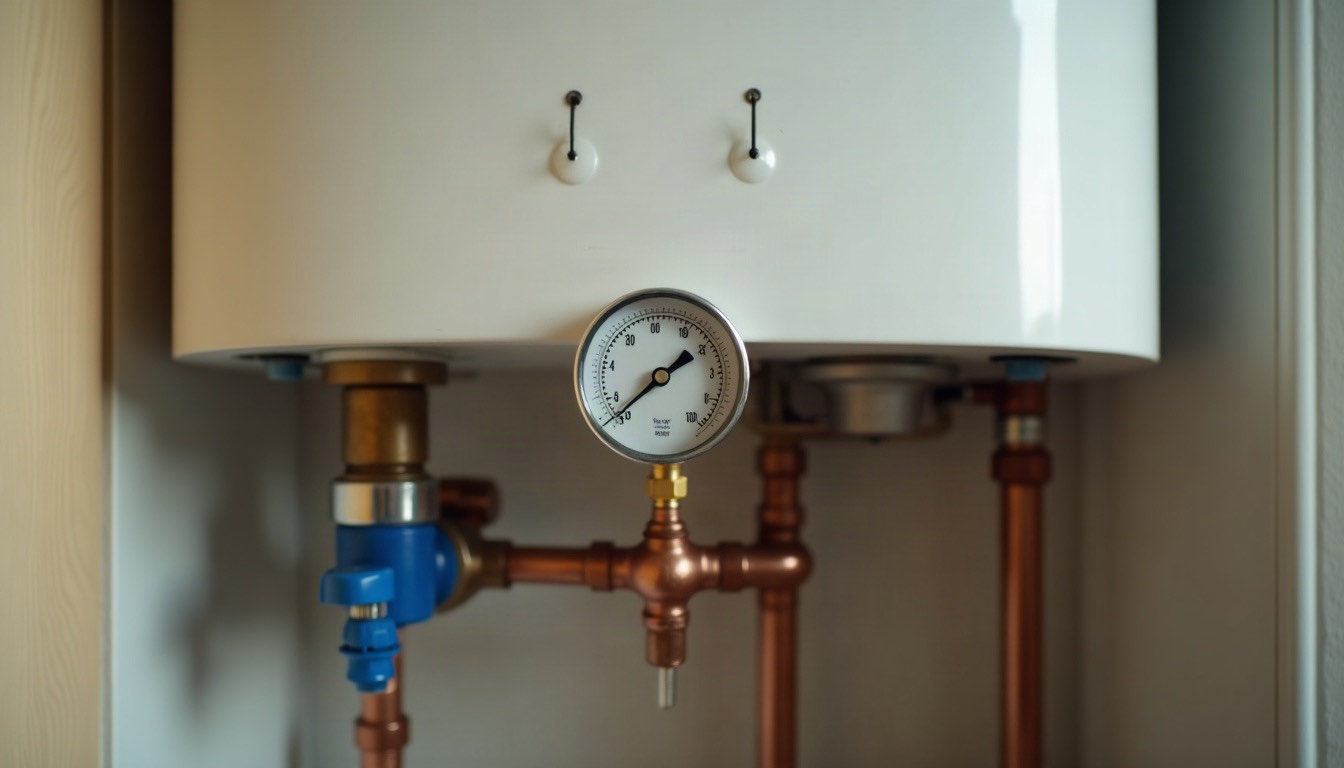
Radiators not getting properly warm, or the boiler shutting down with an error code? Low water pressure is a common cause. Topping up is something you can do yourself in about fifteen minutes, with the filling loop or hose and your boiler’s manual. This article explains how, which pressure is right, and when frequent topping up means something else is going on.
Why does boiler pressure drop?
A central heating system is closed: the same water circulates from the boiler to the radiators and back. Still, the pressure drops over time, for a few ordinary reasons.
- Bleeding radiators. When you let air out of a radiator, a little water escapes too.
- Air leaving the water. After filling or servicing, air dissolved in the water slowly escapes, and the pressure drops with it.
- Tiny losses. A valve or joint that weeps very slightly only shows up after weeks.
Topping up a few times a year is therefore normal. Milieu Centraal, the Dutch independent energy advice centre, recommends checking the pressure a few times a year and topping up when it is too low.
Which pressure is right?
The boiler has a pressure gauge: a small dial or a number on the display. The correct value is in the manual. Bosch gives a pressure of 1.5 to 2 bar for its boilers, and many others are in the same range. When the heating runs, the pressure rises a little; that is normal.
So read it when the system is cold, for example in the morning before the heating comes on. Lost the manual? Search for your boiler’s brand and model: most manufacturers publish their manuals online.
How to top up your boiler
The exact method depends on your boiler. Some have a built-in filling valve or key, a few top up automatically, and in some countries an external braided filling loop is common. Check the manual first. Most boilers work like this:
- Turn the heating down and let the system cool. Cold water going into a hot boiler can cause damage.
- Find the filling loop or hose. It often hangs near the boiler. Connect it to the cold water supply if it is not permanently fitted.
- Let water run through a loose hose first, so you do not push air into the system.
- Open the supply tap first, then the filling valve on the boiler, slowly. This avoids a pressure surge. Watch the gauge.
- Close at the right pressure. Close the filling valve first, then the supply tap. Disconnect a loose hose and catch the last bit of water with a cloth.
- Bleed your radiators if you hear ticking or gurgling, then check the pressure again. Bleeding usually lowers it a little, so you may need to top up once more.
If the boiler does not restart by itself, check whether it has a reset button. Use ordinary tap water: ATAG’s manual, for example, explicitly says not to add chemicals to the heating water yourself.
Bleeding and topping up go together
You can hear air in radiators: ticking, gurgling or hissing, and the radiator stays cold at the top. Milieu Centraal advises bleeding an older system a few times a year so it keeps working well and quietly.
- Heating down, let the radiators cool.
- Open the bleed valve at the top a quarter turn with a radiator key, with a cloth underneath.
- When the hissing stops and water comes out, close it.
- Start on the lowest floor and work your way up.
- Check the boiler pressure afterwards and top up if needed.
The best moment is the start of the heating season.
How often is normal?
A few times a year is normal, especially after bleeding and at the start of the heating season.
If the pressure keeps dropping quickly, say every week or every few weeks, water is escaping or a part is not working properly. Bosch names a faulty expansion vessel or a problem with the pressure relief valve as possible causes of a sudden pressure drop. Have a look yourself:
- Do you see damp patches or limescale marks at radiator valves, joints or under the boiler?
- Is water dripping from the small pipe under the boiler, or from a pipe that ends outside? That can be the pressure relief valve releasing water.
- Has anything changed in the system recently, such as a new radiator?
Found nothing? Have an engineer check it. Work on a gas boiler itself is for a qualified professional: in the Netherlands, since 1 April 2023, only companies with a CO-vrij certificate may do it, and other countries have similar schemes, such as Gas Safe registration in the UK. More on servicing in our home maintenance schedule.
Pressure too high
If you overfilled, the pressure is clearly above the value in the manual when the system is cold. Bleed a radiator and let some water out until the pressure is right. If it keeps rising without topping up, have it checked: that points to a problem in the boiler or the expansion vessel.
Write it down for next time
You only top up a few times a year, so every time you search again for the loop, the right pressure and which valve to open first. Write it down once:
- the correct pressure from the manual;
- where the filling loop and radiator key are;
- how topping up works on your boiler;
- when you last topped up, so you notice if it is needed more often than normal.
That last point is the most useful. Whoever keeps track of when the boiler was topped up spots a leak sooner than someone who just thinks “again?”.
How Domeaz helps
In Domeaz you add the boiler to your appliances, with brand, model, warranty and the manual as an attachment. The correct pressure and where the filling loop is go into your home information, so everyone in the household can find them. Plan “Check pressure and bleed radiators” as recurring maintenance at the start of the heating season and you get a reminder automatically. Every time you tick it off, it is in the history, so you can see how often it was needed.
Keeping the boiler’s paperwork in order helps when something breaks: read how the EU legal guarantee works for appliances and how long appliances last.
Domeaz is free to start and has no ads. Discover Domeaz.
Frequently asked questions
- What is the right boiler pressure?
- The correct value is in your boiler's manual. Bosch gives 1.5 to 2 bar for its boilers, and many other boilers are in the same range. Read the pressure when the system is cold: it rises a little when the heating is running.
- How often should you top up a boiler?
- A few times a year is normal, especially after bleeding radiators. Milieu Centraal, the Dutch independent energy advice centre, recommends checking the pressure a few times a year. If it keeps dropping quickly, water is escaping somewhere or a part is faulty: have an engineer look at it.
- Should the heating be off when you top up?
- Yes. Turn the thermostat down and let the system cool. You read the pressure correctly, and cold water going into a hot boiler can cause damage.
- Which valve do you open first?
- Usually the tap on the water supply first, then the filling valve on the boiler, to avoid a pressure surge. Close them in reverse order. Always check your boiler's manual: filling loops differ between brands.
- What if the pressure is too high?
- If the pressure is clearly above the value in the manual when the system is cold, bleed a radiator to let some water out until it is right. If the pressure keeps rising without you topping up, call an engineer.
This article was written with the help of AI and checked by the Domeaz team. The sources are in the text. Spotted a mistake? Email hello@domeaz.app.