Overwintering plants: when to bring them in and how often to water
Updated: 30 October 2026
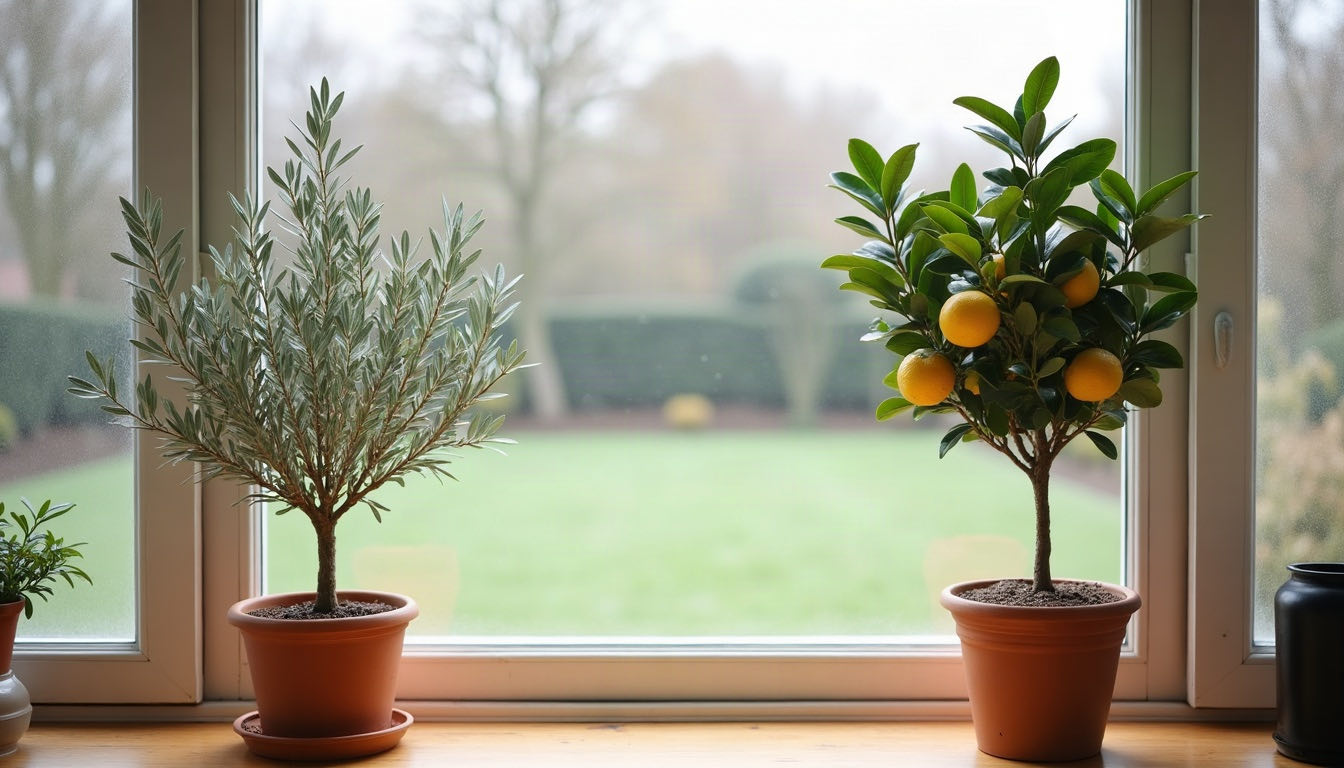
All summer the olive tree shows off on the patio, the oleander flowers and the lemon tree is full of fruit. Then the nights turn cold and the same question comes back every year: does it have to come in now, or can it wait a little longer? And once it is indoors, how much water does it still need? This article explains when your plants should move, where they overwinter best and how to water without drowning them.
When the first frost arrives depends a lot on where in Europe you live: a balcony in Lisbon and a garden in Berlin are different worlds. The rules below are about what the plant can handle. Combine them with your local weather forecast.
Why plants in pots are more vulnerable
A plant in the ground has its roots deep in the soil, and the soil holds warmth. A plant in a pot does not. Its roots sit above ground, with only a wall of terracotta or plastic between them and the cold. According to the Royal Horticultural Society (RHS), the root ball in a pot can freeze solid, while the same plant in a border would survive. Wet makes it worse: a pot standing in water freezes faster and can crack.
That is why the same plant can stay out in the garden but has to come in when it grows in a pot.
When should they come in?
The short answer: as late as possible, but before the frost the plant cannot handle. The longer a plant stays out, the better it hardens off. Bring it in too early and it spends weeks in a warm, dim space, putting out weak, leggy shoots.
Rules of thumb from Dutch and Belgian gardening advice (MAX Vandaag, drawing on Groei & Bloei and the Dutch potted-plant society, and the DIY chain Hubo), in line with the RHS:
- Young and tender plants come in before the first night frost. The RHS notes this is usually somewhere between September and November.
- Citrus does not tolerate frost. Bring lemons, oranges and kumquats in as soon as frost is forecast.
- Olive trees handle light frost down to about minus 5 °C, as long as the roots are protected. If it gets colder, they come in.
- Oleander and agave can survive a short, light night frost outdoors with a wrapped pot.
It varies by species and even by plant: a large, old olive tree is tougher than a young one fresh from the nursery. If in doubt, check the label or look up the species.
Where do they overwinter best?
Most potted plants want to be cool and light in winter. Not warm, because then they think spring has come and start growing while there is too little light. That gives long, floppy shoots, and with a plant like agapanthus few or no flower buds in spring.
Guide values from the same sources:
| Plant | Temperature |
|---|---|
| Many potted plants | 5 to 12 °C |
| Olive tree | 2 to 10 °C |
| Hibiscus, bougainvillea, mandevilla | 10 to 16 °C |
Good spots are an unheated conservatory, a garage or shed with a window, a cool stairwell or a frost-free greenhouse. The living room is usually not a good place: too warm and too dry.
A few points to watch:
- Light: evergreens such as olive, citrus and oleander need light in winter too. Plants that drop their leaves, such as figs or fuchsias, can go somewhere darker.
- Air: open a window on mild days. Still, damp air leads to mould.
- Pests: look under the leaves every few weeks. Mealybugs and spider mites love an indoor winter.
How often do you water in winter?
This is where it most often goes wrong. In winter a plant hardly grows, loses little water and so needs far less. Too much water in a cold pot causes root rot, and you only notice when it is too late.
- Evergreen plants: a little water about once a week, and no more than needed.
- Deciduous plants: even less. The soil can be almost dry, but not bone dry.
- Olive tree: according to Hubo, only water when the soil feels dry a few centimetres down, and then just enough to keep it lightly moist.
- Citrus: sparingly, but do not let the root ball dry out completely.
- No feeding in winter. Only towards the end of winter, as the days get longer, do you give more water and food again.
The best test is still your finger: push it a few centimetres into the soil. Moist? Wait.
And the houseplants?
Houseplants slow down in winter too. There is less light, they grow more slowly, and so they need less water. The advice you see in almost every source: only water when the top layer of soil feels dry, and remember that a plant in a cool, dim room needs even less than one on a sunny windowsill.
Two winter problems often go together:
- Dry air from the heating. Do not put plants right above or next to a radiator. Tropical plants such as calathea quickly get brown leaf tips in a heated room; succulents and cacti cope well.
- Too little light. Move plants closer to the window, but not into the cold of a draughty window or a door that opens a lot.
Plants that stay outside
Not everything can or needs to come in. For sturdy potted plants that tolerate some frost:
- Wrap the pot in bubble wrap, hessian or straw so the roots do not freeze. The RHS recommends this too.
- Raise the pot on feet so it does not stand in water.
- Group plants together against a wall of the house, out of the wind.
- Keep fleece ready for nights with hard frost. According to Hubo, it can stay a few degrees warmer under a winter cover than outside.
A calendar for the garden
Once you have more than a few plants, remembering is the hard part. Which one had to come in at minus 5? And did your partner already water the conservatory yesterday? It helps to write down per plant what it needs, and combine that with the weather forecast. For the rest of the home, see our home maintenance schedule; and in winter, plants overwintering indoors add to condensation on the windows.
How Domeaz helps
In Domeaz you add every plant in your home, indoors or outdoors. Take a photo or type the species, and the app suggests the care: how often to water from April to October and how often in winter, plus feeding, pruning and repotting. You get a reminder when it is time, and you see straight away when someone else in the household has watered.
Turn on the weather and Domeaz warns you about frost, and a proper downpour counts as water for your outdoor plants. The forecast comes from the Norwegian Meteorological Institute and works across Europe. If something goes wrong, with yellow leaves or bugs, the plant doctor takes a look. Read more about garden and plants in Domeaz.
Domeaz is free to start and has no ads. Discover Domeaz.
Frequently asked questions
- When should potted plants come indoors?
- As late as possible, but before the frost the plant cannot handle. Tender and young plants come in before the first night frost. An olive tree tolerates light frost down to about minus 5 °C; citrus does not tolerate frost at all.
- How warm should it be where plants overwinter?
- For many potted plants 5 to 12 °C is fine, for an olive tree 2 to 10 °C. Hibiscus, bougainvillea and mandevilla prefer it warmer, around 10 to 16 °C. A heated living room is too warm and too dry for most of them.
- How often do you water overwintering plants?
- Much less than in summer. Evergreen plants get a little water about once a week, deciduous plants even less. Feel the soil first: if it is still moist a few centimetres down, wait.
- Do houseplants need less water in winter?
- Yes. With less light they grow more slowly and lose less water. Only water when the top layer of soil feels dry. Too much water in winter is a common cause of root rot.
- Can a plant stay outside if I wrap the pot?
- For sturdy plants that tolerate some frost, yes. Wrap the pot in bubble wrap or hessian, raise it on pot feet, move it against a house wall and keep fleece ready for frosty nights. For plants that cannot take frost, wrapping is not enough.
Sources
This article was written with the help of AI and checked by the Domeaz team. The sources are in the text. Spotted a mistake? Email hello@domeaz.app.