Car service schedule: what maintenance is due at which mileage?
Updated: 14 November 2026
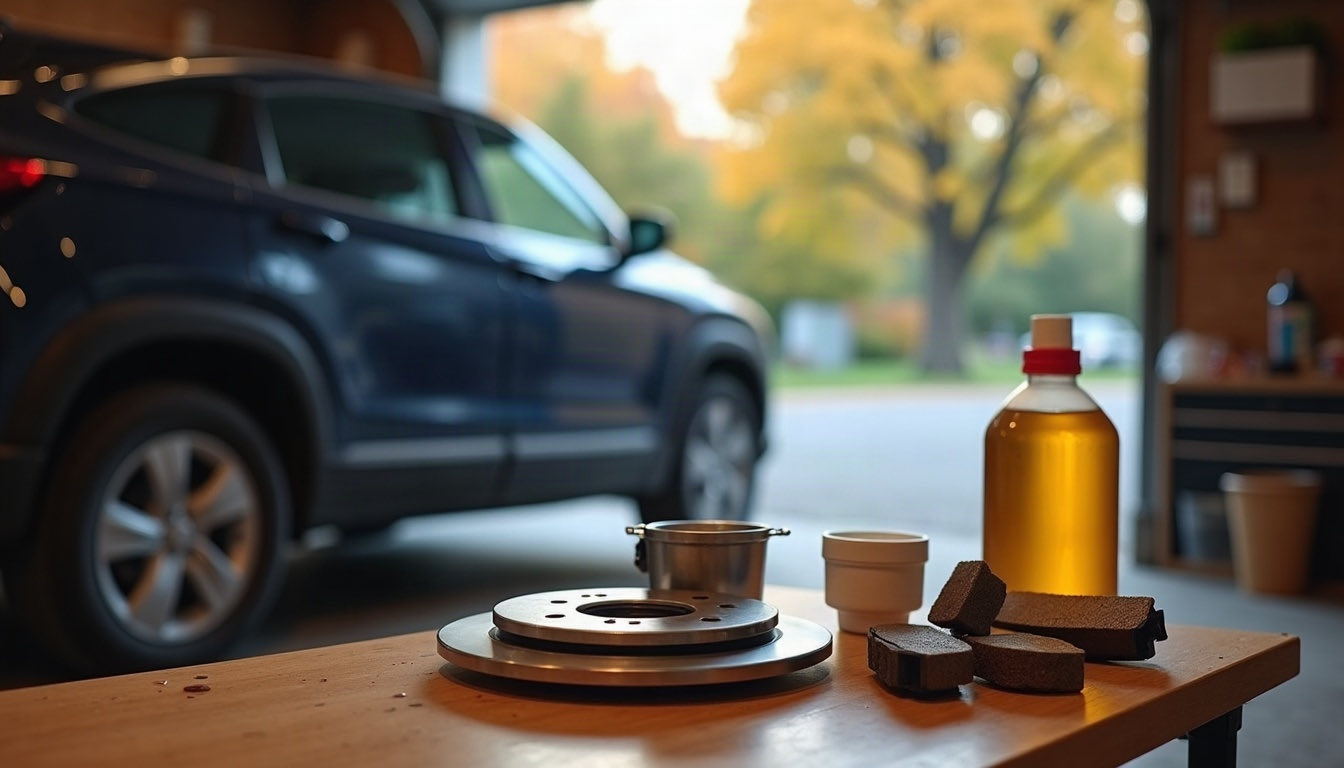
“It must be about time for a service.” Almost every driver says it at some point, and usually it is a guess. The service book is in the glovebox, the last invoice in a drawer, and you know the mileage roughly. This article covers which maintenance belongs to which mileage, why time counts as much as kilometres, and how to keep track without guessing. The figures come from the Dutch and German motoring clubs, ANWB and ADAC.
Minor service, major service: do they still exist?
Cars used to visit the garage every 5,000 km. Today an interval of 30,000 km or more is no exception, writes the ANWB. The old split into a minor and a major service no longer fits modern cars well: the manufacturer sets out per model what needs doing when.
As a guideline, the ANWB still mentions:
- Minor service: roughly once a year or after 15,000 km. Engine oil and oil filter are replaced, and dozens of points are checked, such as brake pads, lights, battery and fluids.
- Major service: roughly every two years or after 30,000 km. It includes bigger jobs such as the timing belt, shock absorbers or brake discs when they are due.
Time or mileage: whichever comes first
Every interval has two limits: a number of months and a number of kilometres. The service is due at the limit you reach first. If you drive a lot, that is the mileage; if you drive little, the date.
Driving little is no reason to skip a service. Oil, rubber parts and fluids age even when the car is parked, the ANWB warns. Manufacturers use either a fixed interval or a flexible one, where the car itself indicates when the next service is due, according to the ADAC.
What maintenance at which mileage?
The figures below are guidelines from the sources at the end. Your car’s own service schedule always comes first.
| Part | Guideline | Rough cost (Netherlands) |
|---|---|---|
| Service with oil and oil filter | Every year or 15,000 km; on newer cars often 30,000 km or more | Depends on make and work |
| Brake fluid | Every two years, regardless of mileage | €50 to €75 |
| Brake pads | Around 80,000 km with normal driving | Depends on model |
| Spark plugs (petrol) | Around 60,000 km | Depends on model |
| Timing belt | Between 60,000 and 240,000 km, or after a number of years | €300 to €1,000 |
| Electric car: service | Every 20,000 to 30,000 km or yearly | €150 to €500 |
| Electric car: swap front and rear tyres | Every 10,000 km |
Sources: services, brake fluid, timing belt and electric car from the ANWB; brake pads and spark plugs from the ADAC.
The timing belt: the expensive one
The timing belt deserves extra attention, because it is a costly job you do not want to miss. The interval varies widely: roughly between 60,000 and 240,000 km, or after a number of years, whichever comes first (ANWB). Replacement costs about €300 to €1,000. The tensioner rollers are usually replaced at the same time, and the water pump too if the belt drives it. A timing chain often lasts the life of the car; if the manufacturer does prescribe an interval, stick to it.
Brake fluid: every two years
Brake fluid absorbs moisture, so it needs refreshing on time. The ANWB names every two years as the usual interval, however much you drive.
Electric cars
An electric car has no oil, spark plugs or timing belt. It still needs maintenance: brakes, tyres, suspension, electronics, fluids and filters. The ANWB mentions a service every 20,000 to 30,000 km or once a year, for about €150 to €500, and advises swapping the tyres front to rear every 10,000 km.
The inspection is not a service
The periodic roadworthiness test checks whether your car is safe and clean enough for the road. It says nothing about a timing belt due in 10,000 km. When your car needs its inspection and how to find the date is in When is your car’s inspection due?.
Keeping track without guessing
- Look up your car’s schedule. It is in the service book, the owner’s manual or the manufacturer’s app. Note the interval for each part in months and in kilometres.
- Write down the mileage now and then. Without a reading you cannot tell when you will reach the mileage limit. Once a month is enough.
- Record every service. Date, mileage, what was done, what it cost and which garage. Keep the invoice.
- Look ahead. Your readings show how much you drive per month, and so around which date you will reach the next mileage limit.
How Domeaz helps
In Domeaz you put your car in the garage. In the Netherlands you type in the number plate and the app fetches make, model, year and the APK date from the RDW for free; elsewhere you take a photo or fill in the details yourself. You then get a maintenance plan by time and by mileage, which you adjust point by point to the schedule in your service book.
You update the mileage now and then, and Domeaz works out how far you drive per day. For every point you see how many kilometres are left and around which date it falls due, and you get a reminder on the day the first point is due. You record every service with date, reading, cost and garage. Bikes, e-bikes and motorbikes fit in the same garage. Read more about tracking maintenance for your car, bike and e-bike.
Frequently asked questions
- How often does my car need a service?
- The manufacturer decides, by time and by mileage, whichever comes first. As a guideline, the Dutch motoring club ANWB mentions roughly once a year or 15,000 km for a minor service and roughly every two years or 30,000 km for a major one. On newer cars an interval of 30,000 km or more is no exception.
- When should the timing belt be replaced?
- According to the ANWB, roughly between 60,000 and 240,000 km, or after a number of years, whichever comes first. The exact moment is in your car's service schedule. Replacement costs about €300 to €1,000.
- How often should brake fluid be changed?
- Usually every two years, regardless of mileage. Brake fluid absorbs moisture, so it needs refreshing on time. In the Netherlands this costs €50 to €75 on average, according to the ANWB.
- Do I need a service if I hardly drive?
- Yes. Oil, rubber parts and fluids age even when the car is parked. That is why there is a time interval as well as a mileage interval.
- How often does an electric car need maintenance?
- The ANWB mentions every 20,000 to 30,000 km or once a year, for about €150 to €500. There is no oil to change, but brakes, tyres, suspension, fluids and filters are checked.
- Is the roadworthiness test the same as a service?
- No. The periodic inspection (APK in the Netherlands, HU/TÜV in Germany) checks safety and emissions. It says nothing about a timing belt or brake fluid that will be due soon.
Sources
This article was written with the help of AI and checked by the Domeaz team. The sources are in the text. Spotted a mistake? Email hello@domeaz.app.