Watering houseplants: how often, and how do they survive your holiday?
Updated: 14 November 2026
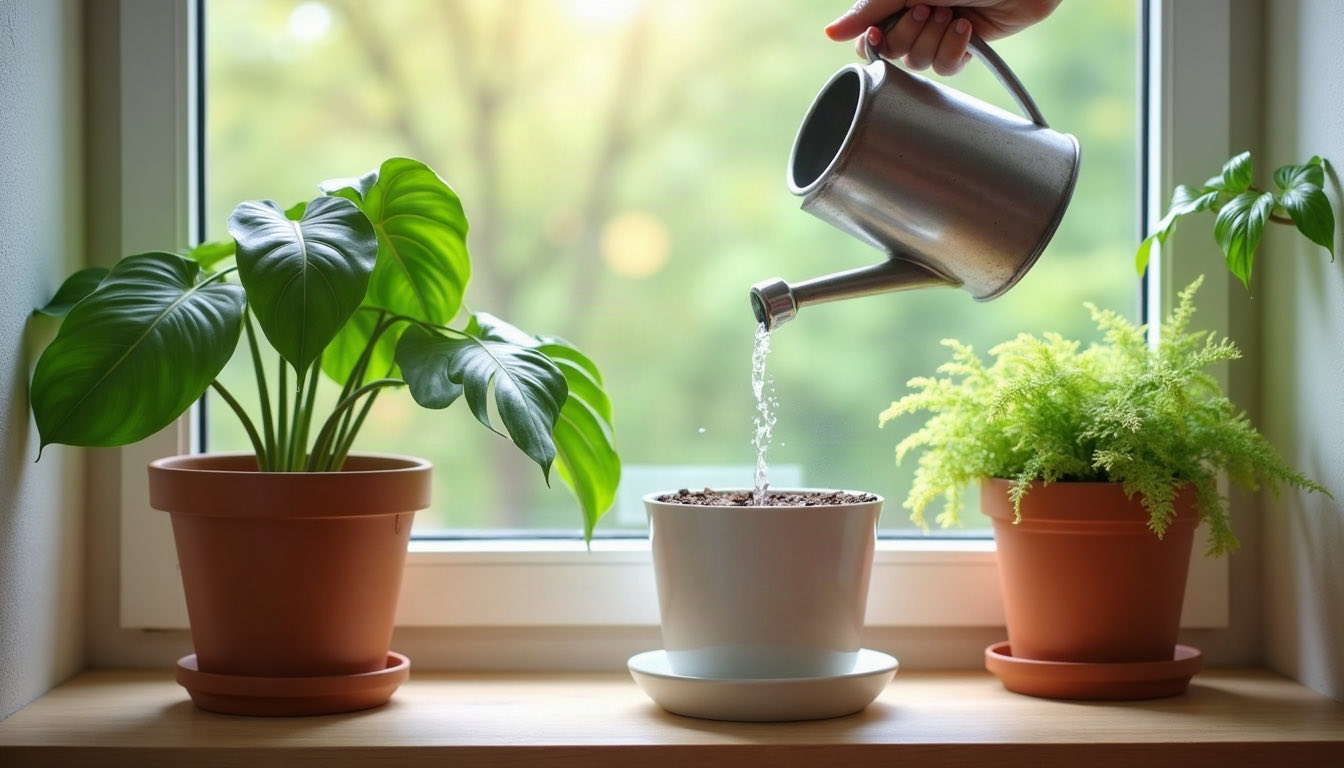
The monstera is drooping, the ficus is dropping leaves and you cannot remember when you last watered them. Too little water is a nuisance, but too much goes wrong just as easily: the roots rot. This article covers how often to water, how to tell whether a plant is thirsty, what changes in winter and how plants get through your holiday.
How often should you water houseplants?
As a rule of thumb, the Dutch plant-food brand Pokon says once or twice a week: more often in summer, less in winter. But every plant is different. A cactus needs far less water than a fern, and a plant in a small pot dries out faster than one in a large pot.
That is why checking beats a fixed day. The RHS puts it simply: do not water routinely, check that the pot needs water first.
How to tell whether a plant is thirsty
- The finger test. Push a finger into the compost. If the surface feels dry, it can have water.
- The weight. A dry pot is lighter than a wet one. Lift it after watering once, and next time you will feel the difference straight away.
- The leaves. Curled or dried-out leaves can point to too little water. A plant that wilts while the compost is wet has more likely had too much.
How to water
- Water thoroughly, until water runs out of the hole in the bottom of the pot.
- Let the pot drain, then empty the saucer or outer pot. If a plant sits in water for long, the air spaces in the compost fill with water and the roots drown, says the RHS.
- Use water at room temperature, especially in winter. You can let tap water stand in an open jug for a day.
- Choose a pot with a drainage hole, so excess water can escape.
In winter
Most houseplants grow less in winter and want less water. A plant in a cool room needs less than one in a warm room. At the same time, central heating dries the air, so pots can actually dry out faster in winter (RHS). Here too: feel first, then water.
Watering plants while on holiday
If you are away for a week, most plants cope fine as long as you water them once just before you leave, writes the Plants and Flowers Foundation Holland. Do not give them extra, or the roots will rot. In summer, move them out of bright sun, away from the window (RHS).
Away for longer? There are a few simple methods:
| Method | How it works | Best for |
|---|---|---|
| Bottle | Fill a bottle with water and push it upside down about 5 cm into the compost: 0.5 litre for a small plant, a litre or wine bottle for a large one | Single plants |
| String | Run a cotton string from a container of water to the pot and push the end about 5 cm into the compost | A few plants around one container |
| Bath or sink | Lay old towels in the bath with 1 to 2 cm of water and stand the pots on them | Lots of small plants |
| Plastic bag | Put a clear bag over the plant so less moisture evaporates | Short absences only |
| Drip spike or watering globe | From the shop; water the plant first | Single plants |
Sources: bottle, string, bath and drip spike from the Plants and Flowers Foundation Holland; plastic bag from the RHS.
A few things to keep in mind:
- Cacti and succulents need no help. Snake plants and dracaenas can also go several weeks without water. Strelitzia and alocasia, on the other hand, want water every week or two.
- Hydroculture only needs topping up every four to five weeks instead of every week.
- In winter most plants can go a week or two without attention, as long as the compost is moist but not waterlogged when you leave (RHS).
- Away for more than a couple of weeks? Ask someone to water. Group plants with the same needs and write down which plant wants water how often.
How Domeaz helps
In Domeaz you take a photo of a plant, and the app recognises the species and suggests a care rhythm: how often to water in summer and in winter, plus feeding, misting, pruning and repotting. You adjust it if your plant turns out to want something else.
You get one reminder a day, and only when there is something to do, not one notification per plant. Every plant shows with a little face whether it is thirsty, and one tap waters it. If you live together, you see straight away who already watered the plants. If a plant still is not doing well, the plant doctor takes a look: it knows how often you watered and tells you if that was too often. Read more about the plant care app for your garden and houseplants.
Frequently asked questions
- How often should I water my houseplants?
- As a rule of thumb, the Dutch plant-food brand Pokon says once or twice a week, more often in summer and less in winter. Better to check each plant: water when the surface of the compost is dry. A cactus needs far less water than a fern.
- How can I tell whether my plant needs water?
- Push a finger into the compost: if it feels dry, it can have water. A dry pot is also lighter than a wet one. Do not water on fixed days without checking.
- What are the signs of overwatering?
- A plant that wilts while the compost is wet is often overwatered: the roots get no air and start to rot. Let the pot drain after watering and empty the saucer.
- How long can houseplants go without water?
- Most plants survive a week without water if you water them once just before you leave. Cacti, succulents, snake plants and dracaenas can manage several weeks. Strelitzia and alocasia want water every week or two.
- How do I water my plants while I am on holiday?
- Up to a week: water before you leave and move plants out of bright sun. Longer: an upturned bottle in the pot, a cotton string from a container of water, or the plants on wet towels in a bath with 1 to 2 cm of water. Away for more than a couple of weeks? Ask someone to water them.
- Should I water less in winter?
- Usually yes: most houseplants grow less in winter and need less water. Note that central heating dries the air, so pots can dry out faster. A plant in a cool room needs less water than one in a warm room.
Sources
This article was written with the help of AI and checked by the Domeaz team. The sources are in the text. Spotted a mistake? Email hello@domeaz.app.